

Nature Beat #92
Updates, stories, resources and opportunities

Welcome to the latest edition of Global Nature Beat. If you are new here, read my About page to find out what this newsletter is, who I am and why I am doing this. This edition includes:
Updates on Indonesia’s forests, the Convention on Biological Diversity, the International Waterbird Census, the High Seas Treaty.
Features about deep-sea mining, elephant winners and losers, involuntary parks, sand dredging impacts, climate-driven wildfires.
Journal papers on wildlife fashion, unprotected rivers, environmental crime, tourists and deforestation, invasive species, tropical forest recovery and more.
Plus the usual mix of news from around the world, useful resources, jobs and opportunities for environmental journalists, and more.
Taking The Pulse
Indonesia: A government task force has reclaimed a Switzerland-sized area of land — and collected more than US$130 million in fines — from companies operating plantations and mines illegally in forest areas. As Hans Nicholas Jong reports, the task force began its work last year and could seize a similar area in 2026. Civil society groups say the lack of clarity about what will happen to the money and the seized lands creates room for abuse and could spark conflict. Meanwhile, as Jeff Hutton reports, deforestation is accelerating in Indonesia — notably through the planned clear-felling of two million hectares in Papua. Indonesian forester and sustainability expert Aida Greenbury says the recent deadly floods in Sumatra have shifted public opinion about deforestation, with more Indonesians now openly discussing its impacts.
Waterbirds: One of the world’s biggest, longest-running and most influential citizen science initiatives is underway. For the 60th year, people around the world are heading out to wetlands around the world to count birds for the annual International Waterbird Census. Wetlands International says the census provides data on population trends for 570 bird species and has identified and ensured protection for a large area of important wetland habitat.
High Seas Treaty: The new UN Agreement on Marine Biological Diversity of Areas Beyond National Jurisdiction, will enter into force on 17 January. So far, 146 countries and the European Union have signed the treaty, and 83 of them have ratified it. Among other things, the treaty provides a legal framework for creating marine protected areas in international waters. The first conference of parties is expected to happen within one year.
Biodiversity: Most (144 of 196) parties to the UN Convention on Biological Diversity (CBD) have submitted their latest national reports ahead of the 28 February deadline. But so far only 69 have submitted a new National Biodiversity Strategy and Action Plan that aligns with the Global Biodiversity Framework — the strategy for halting and reversing nature loss by 2030. This year’s conference of parties to the CBD, in October, will provide the first review of progress towards the strategy’s goals and targets. Before that, the CBD’s Subsidiary Body on Implementation will meet next month in Rome, where negotiators will work on decisions for the conference of parties to adopt — for more details, join the CBD ‘s webinar series on 22, 23 and 28 January.
In The Spotlight
Christian Elliott wrote about scientists racing to understand whether deep‑sea ecosystems can recover from mining as governments and companies push ahead with plans to extract metals from the ocean floor.
Sophy Roberts reported on the contrasting fortunes of elephant populations in different parts of Africa — with some hunted to near extinction and others becoming so numerous they are creating problems for local people.
Grace Ekpu reported on how intensive sand dredging in Lagos, Nigeria is reshaping the coastline, destroying fisheries, and deepening social and environmental risks for waterfront communities.
Ashley Kirk and Pablo Gutiérrez reported on — and mapped — how climate‑driven wildfires have doubled global tree‑cover loss in two decades, accelerating a dangerous warming–fire feedback loop.
Annelise Gisburt wrote about ‘involuntary parks’, the wildlife refuges created by armed conflict.
From The Journals
The wildlife fashion industry’s claims to support conservation should be treated with caution — read the full paper.
Most US rivers lack any protection from human activities — read the press release or the policy brief (the full paper is paywalled).
The first nationwide assessment of prosecutions for environmental crimes in Australia finds illegal vegetation clearance, fishing and wildlife trafficking to be most prevalent — read the full paper.
More tourist visits means less deforestation inside Madagascan protected areas, but more deforestation outside them — read the full paper.
Insects are overlooked victims of invasive animal and plant species — read the press release or the full paper.
Tropical forests can recover twice as fast after deforestation when their soils contain enough nitrogen — read the press release or the full paper.
Biological invasions cost Morocco an estimated US$1-5 billion each year — read the full paper.
South Africa’s biodiversity policies and programmes in the face of climate change threats — read the full paper.
Take A Trip to Planet Ficus
My other newsletter Planet Ficus is devoted to stories about the world’s most fascinating plants — the strangler figs and their kin, which have shaped our world and our species in profound ways. Take a trip there for a rich mix of stories about the ecological and cultural importance of these trees.
What Caught My Eye
Prevention of environmental crime is moving from niche interest into the diplomatic mainstream, writes Robert Muggah.
Scientists are concerned about the misuse of research permits to trap songbirds in Spain.
Scientists have cast doubt on the validity of studies claiming that microplastics are present throughout the human body, reports Damian Carrington.
The Australian government will spend up to A$13 million to establish at least eight new Indigenous Protected Areas.
The first global review of its kind identified more than 800 important areas for sharks and rays — read the press release or the full report.
Warren Cornwall reported on new research showing that microbes living on tree bark play a previously unrecognized role in limiting global warming.
Oil and gas licences overlap with 7,000 protected areas worldwide, and the total overlap area is bigger than France, report Alexandre Brutelle, Daniela Sala and Yann Philippin.
A unilateral US takeover of Greenland threatens to disrupt open scientific collaboration that is helping us understand the threat of global sea-level rise, writes Martin Siegert.
Chronic low-dose exposure to a common pesticide chlorpyrifos shortened the lifespans of wild fish in China and may pose similar aging-related risks in humans, reports Erik Stokstad.
Ruth Kamnitzer reported on the first year of implementation of the Global Biodiversity Standard, a certification scheme helping forest restoration projects prove real biodiversity gains.
Victoria Molloy spoke to former hunters and poachers of wildlife in Canada, Mexico, Nigeria and the United States who are now active conservationists.
Mongabay launched its Newswire Desk to deliver bite-sized news on nature.
How to Support Global Nature Beat
I publish this newsletter as a free service to thousands of readers in more than 120 countries. If that is something you can support, please consider becoming a paying subscriber for less than £1 a week. If you can spare that, you will be helping me to keep Global Nature Beat going for those who cannot afford to pay.
Tips And Resources
The Talanoa Institute has produced guides for journalists and newsrooms on adaptation to climate change in English, Portuguese and Spanish.
The UN Environment Programme’s World Conservation Monitoring Centre announced it has merged its databases on protected areas and other effective area-based conservation measures (OECMs) into a single World Database on Protected and Conserved Areas.
WWF published a report on how OECMs can advance inclusive conservation in Bolivia, Brazil, Colombia, Ecuador, Mexico, and Peru.
On 21 January, ThinkLandscape is hosting an online discussion on the pros and cons of using synthetic biology to conserve nature — see also, how to implement the International Union for the Conservation of Nature’s policy on synthetic biology.
See past editions for more tips and resources.
Jobs And Opportunities
The Earth Journalism Network is hiring a program officer — no deadline listed.
The New York Times is hiring an assistant editor, climate — no deadline listed.
Journalists from Indonesia and Vietnam can apply to attend the Earth Journalism Network’s workshop on forest governance — deadline 6 February.
The Club of Rome is accepting applications for its Communications Fellowship 2026 — deadline 20 February.
Journalists from Ghana, Mexico and the Philippines can apply to attend the Earth Journalism Network’s virtual workshops on the Global Biodiversity Framework’s 30x30 marine conservation target — deadline extended to 19 January.
The US National Association of Science Writers invites entries for its Science in Society Journalism Awards — deadline 1 February.
The One World Media Awards are open for entries — deadline 9 February.
The Centre for Investigation Journalism is offering ten climate-focused training scholarships — deadline 11 February.
The Reuters Institute for the Study of Journalism invites applications for its fellowship programme — deadline 13 February.
The University of Colorado at Boulder invites applications for its Ted Scripps Fellowship in Environmental Journalism — deadline 1 March.
Free University invites applications for a five-month online training and mentoring programme designed for Russian-speaking journalists in exile who cover Europe’s environmental and climate challenges.
Bonus content: There are 37 jobs, grants, fellowships and other opportunities listed here for Global Nature Beat’s paying supporters. Paid subscriptions are less than £1 per week.
On The Horizon
19-23 January: The World Economic Forum’s annual meeting takes place in Davos, Switzerland.
3-8 February 2026: The 12th Plenary of the Intergovernmental Panel on Biodiversity and Ecosystem Services takes place in Manchester, United Kingdom.
7 February 2026: The Intergovernmental Negotiating Committee developing an international treaty on plastic pollution will meet in Geneva to elect a new chair of the negotiations.
14-16 February: The Corals, Coasts and One Health conference takes place in Saudi Arabia.
16-19 February: The UN Convention on Biological Diversity’s Subsidiary Body on Implementation meets in Rome, Italy.
Bonus content: The full calendar for Global Nature Beat’s supporters includes nature-related intergovernmental negotiations, scientific conferences, report launches, and other events up until 2026.
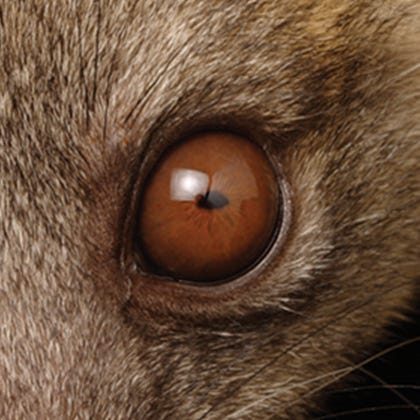
Whose Eye Was It?
The eye belongs to a Western Lowland Olingo. Photo credit: P. Asimbaya y L. Velásquez — Wikimedia Commons.
_in_life_-_ZooKeys-324-001-g022.jpg)
Thanks for reading. For past editions, see the Archive. If you found it interesting or useful, please share and subscribe. If you want to get in contact, you can reach me at: thenaturebeat@substack.com.
Good to hear about Mongabay's Newswire Desk. I've always thought they should do something a bit more accessible.
https://open.substack.com/pub/sh1tbird/p/rewilding-electricity-rewiring-ecology?r=1ppwia&utm_medium=ios&shareImageVariant=overlay