


Welcome to the latest edition of Global Nature Beat. This edition includes:
Updates on the COP17 biodiversity conference, transnational environmental crime, the carbon emissions gap, the spread of Ebola.
Features about saving endangered mountain frogs, no-strings payments leading to forest protection, ecological connectivity in conservation, the pressures of becoming a country’s national bird, the unexpected resurgence of mangroves, environment journalism in Africa.
Journal papers on fetish markets and threatened birds, light pollution in a world-famous national park, salt marshes versus extreme storms, communicating biodiversity loss, birds shaping planetary chemistry, overlooked grassland carbon, threats to mountain species, biological bias against most species, conserving migratory species as the climate changes, and more.
Plus, the usual mix of news from around the world, useful resources, jobs and opportunities for environmental journalists, and more.
Taking The Pulse
Crime: Nearly 100 countries have decided to launch two years of negotiations on an international agreement to strengthen action against transnational environmental crimes such as illegal logging and wildlife trafficking. The decision came in a resolution adopted by parties to the UN Convention on Transnational Organized Crime (UNTOC) on 23 October. See the reactions from Amazon Watch, the Environmental Investigation Agency and the Wildlife Conservation Society, which have all campaigned for the new agreement.
Emissions: The UN Environment Programme’s annual Emissions Gap Report says current policies make it likely that the world will warm by 2.8C above pre-industrial levels by the end of the century. It calls for an 18 percent reduction in global greenhouse gas emissions by 2030 to have even half a chance of limiting global warming to 1.5C — see the press release. Commenting on the report, UN Secretary-General António Guterres said: “The emissions gap is now a leadership gap and the world is running out of time and excuses to close it.”
Ebola: The ongoing outbreak of Ebola that has killed more than 4,600 people in the Democratic Republic of the Congo has reached both Kenya and Nigeria in recent days. It is now the most geographically widespread Ebola outbreak, spreading simultaneously in West, Central and East Africa.
UN Biodiversity Conference — COP17
The COP17 biodiversity conference is underway until 30 October. Here is my look at what the conference needs to achieve:

At the halfway stage, all of the contentious decisions are still being negotiated. On 26 October, the COP17 Presidency will brief journalists on progress in negotiations — register here to join online. Meanwhile, here is a roundup of what has come out of the COP so far:
Ocean
World Resources Institute: Five ways Sustainable Ocean Plans can support progress towards biodiversity goals.
A Greenpeace report says that it could take 265 years to protect 30 percent of the ocean at the current rate of progress, and that networks of sanctuaries in the high seas are needed.
IUCN reported that nearly every assessed shallow-water coral reef ecosystem has an extremely high risk of collapse by 2075, with 96 percent being classified as Critically Endangered — see the press release.
Indigenous Peoples and local communities
Four Indigenous organizations and the Forest Peoples Programme published the Local Biodiversity Outlooks 3 report on the roles of Indigenous Peoples and local communities in biodiversity protection.
The International Indigenous Forum on Biodiversity published a guide to biodiversity conservation in Indigenous and traditional territories.
ClientEarth published a briefing on the legal obligations of States to respect, recognize and promote the rights of Indigenous Peoples and local communities in all conservation interventions.
Biodiversity credits
The International Advisory Panel on Biodiversity Credits launched an online platform that lets companies quantify the business returns from investing in nature credits, and three draft standards intended to build market confidence — see the press release.
ClientEarth published a briefing on opportunities and risks of biodiversity credits.
Finance
OECD published data from over 150 countries showing trends in biodiversity-positive taxes, fees and other incentives since 1980.
The hidden costs of nature-harmful subsidies are four to 12 times larger than the subsidies themselves, according to a new report by Conservation International.
Noting that nearly US$5 trillion of private finance directly harms nature each year, Global Witness assessed 93 national biodiversity strategies and found that only three include measures to address this.
The Stanford Natural Capital Alliance and the Inter-American Development Bank launched a free online course and an implementation toolkit — both in English and Spanish — to support applications of natural capital approaches around the world.
Protected areas
More than 80 organizations signed a letter urging governments to keep extractive industries out of protected and conserved areas.
IUCN launched its updated global standard for effective and equitable protected and conserved areas.
IUCN announced that 25 protected and conserved areas across seven countries achieved Green List status in the past year — meaning that they have been found to be effectively managed and equitably governed, with positive outcomes for people and nature.
Business and biodiversity
Data from the S&P Global Corporate Sustainability Assessment shows that the share of companies publicly committed to protecting biodiversity more than doubled between 2022 and 2025, to 35 percent, but few companies conduct biodiversity risk assessments.
Saving species
Nine private funders and organizations committed more than US$500 million to prevent extinctions and recover the world’s most threatened species.
Armenia and Colombia launched the Coalition of Action to Recover Endangered Species.
Other news
Most national biodiversity strategies mention agroecology, but few also attach funding, implementation pathways and monitoring indicators, says a policy brief from Biovision and partners.
IUCN launched its first global strategy to tackle invasive alien species.
The International Nature Prescribing Alliance was launched to promote the use of nature in healthcare worldwide.
Rachel Sherrington and Hazel Healy reported how lobbyists for the pharmaceutical industry have tried to weaken the Convention on Biological Diversity’s Cali Fund.
How to Support Global Nature Beat
I publish this newsletter as a free service to thousands of readers in more than 120 countries, and am grateful for the support of the 1.8 percent of readers who are paying subscribers. If this is something you can support, please consider becoming a paying subscriber for less than £1 a week. If you can spare that, you will be helping me to keep Global Nature Beat going for those who cannot afford to pay.
In The Spotlight
Morgan Heim and Maddy Rifka wrote about efforts to save California’s endangered mountain yellow-legged frogs from wildlife, disease and other threats.
Jonathan Watts reports that small unconditional payments equivalent to £2 per day helped Indigenous people protect and restore forest in the Peruvian Amazon.
Vincent Nijman wrote about how a 1993 Presidential decree establishing Indonesia’s national bird first endangered and ultimately aided the Javan hawk-eagle.
Fred Pearce reported on what is driving the unexpected global resurgence of mangrove forests.
Lisa Palmer wrote about how conservation success depends on connected, well-managed habitats, not simply protecting 30 percent of the planet.
Adebayo Aare wrote about the rising risks to journalists in Africa whose reporting on the environment increasingly exposes powerful interests — see also the International Press Institute’s renewed call for greater protections.
From The Journals
How US adults respond to different terms and framings for biodiversity loss — read the press release or the full paper.
Birds shape biogeochemistry and ecosystem function globally — read the press release or the full paper.
Countries are not doing enough to focus conservation action on areas of importance for biodiversity — read the full paper.
Light pollution in a large protected area: South Africa’s Kruger national park — read the full paper.
How well salt marshes attenuate waves during extreme storms in different coastal contexts — read the full paper.
Climate finance’s bias toward forests overlooks the importance of grasslands for carbon storage, biodiversity, and water security — read the press release or the full paper.
Rising human pressures threaten vertebrate species living on mountains worldwide — read the full paper.
Fetish markets are a growing threat to birds in West Africa — read the full paper.
Plant-based fake meat can reduce farmland expansion and greenhouse gas emissions but lacks micronutrients — read the full paper.
Most forest-based carbon removal potential is in countries facing medium-to-high socioeconomic constraints — read the press release or the full paper.
Biologists focus disproportionately on birds and mammals, leaving big gaps in knowledge about most living things — read the press release or the full paper.
Habitat loss dynamics across presidential terms in Brazil — read the press release or the full paper.
Conserving migratory animals and the ecosystem services they provide in a changing climate — read the full paper.
What Caught My Eye
The World Bank Group’s increasing use of biodiversity offsets is beset by magical thinking, write Lauren Kelly and Sally Johnson.
Google illegally felled hundreds of thousands of trees at two sites in Finland it had acquired to build data centres.
The Trump administration has set a record by granting legal protection to fewer endangered species than any previous administration, says the Center for Biological Diversity.
A new report from TRAFFIC highlights how gibbons are being smuggled in checked-in luggage on flights between Southeast Asia and India.
Zan Aslam argues that forest protection policies will work better if they build on the beliefs and traditions that already keep trees standing.
Benjamin Bibas wrote about the growing use of litigation to compel stronger conservation action.
The World Wildlife Fund says 1.8 million acres of North America’s grasslands and other open lands were converted to row crop agriculture in 2023—the most recent year with available data.
The World Bank’s private lending arm has withdrawn a US$20 million loan to a Brazilian company linked to deforestation, reports Georgina Gustin.
On 19 October, the European Commission announced grants totalling €390 million to 135 new environment and climate projects across Europe.
Goodbye heat waves, hello heat storms. Maurice Tamman reports that planet-spanning extreme heat has increased dramatically since 2008, giving rise to a new term for these events.
Tips And Resources
Rafiqul Islam Montu shared his tips for compelling climate and coastal journalism.
On 27 October, Climate Home News has a webinar on how decisions at the COP17 biodiversity conference will influence global climate change policy — register here.
On 27 to 29 October, Covering Climate Now is holding four sessions of a webinar designed to help journalists prepare to cover the COP31 climate change conference — register here.
On 30 October, biodiversity scientist Phoebe Barnard is talking about ‘ecosystems, governance and society in unstable times’ — register here.
On 2 November, the Stockholm Environment Institute is holding an online media briefing on the upcoming COP31 climate change conference — register here.
David Helvarg wrote about the rich reporting opportunities in ocean journalism.
See past editions for more tips and resources.
Jobs And Opportunities
New Hampshire Public Radio is hiring a climate change reporter — deadline 30 October.
Informed Earth invites journalists to apply for a three-day virtual workshop to strengthen reporting on global fisheries transparency issues — deadline 16 November.
The Pulitzer Center is offering rainforest reporting grants — deadline 25 November.
Apply for a John S. Knight Journalism Fellowship at Stanford University — deadline 2 December.
The NRDC Climate Storytelling Fellowship 2027 enables writers worldwide to develop screenplays that explore climate challenges and solutions — deadline 4 December.
The Southern African Development Community launched the 2027 SADC Media Awards — deadline 28 February.
The Global Shining Light Award for investigative journalism is open for entries — deadline 28 February.
Bonus content: There are 40 jobs, grants, fellowships and other opportunities listed here for Global Nature Beat’s paying supporters. Paid subscriptions are less than £1 per week.
On The Horizon
2-6 November: The 81st meeting (SC81) of the standing committee of the Convention on International Trade in Endangered Species takes place in Geneva, Switzerland.
5-6 November: The Global Pollinator Conference takes place in Rome, Italy.
9-20 November: UN Climate Change Conference (COP31) will take place in Antalya, Turkey.
2-4 December: The UN 2026 Water Conference takes place in the United Arab Emirates.
Bonus content: The full calendar for Global Nature Beat’s supporters includes nature-related intergovernmental negotiations, scientific conferences, report launches, and other events up until 2029.
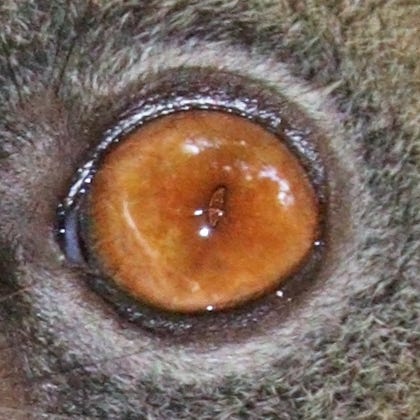
Whose Eye Was It?
The eye belongs to an Ankarana sportive lemur. Photo credit: Charles J. Sharp — Wikimedia Commons.

Take A Trip to Planet Ficus
My other newsletter Planet Ficus is devoted to stories about the world’s most fascinating plants — the strangler figs and their kin, which have shaped our world and our species in profound ways. Take a trip there for a rich mix of stories about the ecological and cultural importance of these trees.
Thanks for reading. For past editions, see the Archive. If you found it interesting or useful, please share and subscribe. If you want to get in contact, you can reach me at: thenaturebeat@substack.com.