

Nature Beat #116
Updates, stories, resources and opportunities

Welcome to the latest edition of Global Nature Beat. This edition includes:
Updates on pharma and tropical forests, progress on global biodiversity goals, COP17 expectations, tigers wild and farmed, mangrove protection and restoration.
Features about community-led marine conservation in Hawaii, leopard-human conflict in Nepal, manganese mining in South Africa, the Church of England’s missed opportunity on nature, India’s neglected grasslands, and Africa-wide biodiversity mapping.
Journal papers on frontier threats in Amazonia, bright spots for peatlands, mountain insects in a warming world, new wild foods in a time of crisis, orangutan population updates, smallholders and the EU Deforestation Regulation, nature and the mind, invasive species and climate change, and more.
Plus, the usual mix of news from around the world, useful resources, jobs and opportunities for environmental journalists, and more.
Taking The Pulse
Biodiversity: On 26 July, the secretariat of the UN Convention on Biological Diversity (CBD) published a second draft of its report on progress toward achieving the 23 targets of the Global Biodiversity Framework by 2030. It isn’t pretty reading: the report says parties to the CBD are only making adequate progress on one of the targets. This itself seems bizarre, as that target is on minimizing the impacts of climate change on biodiversity, and that problem is far from fixed. A final draft of the report will inform the global review of progress that parties to the CBD will undertake at the COP17 conference in Armenia in October. For more detail on the draft report and analysis of what it means for COP17, I recommend this by Daisy Dunne, Orla Dwyer and Aruna Chandrasekhar, this by Fermín Koop, or this by Giuliana Viglione and Orla Dwyer, who report that 84 percent of countries failed to meet their pledge to identify nature-harming subsidies by 2025.
COP17: Delegates at the COP17 conference will have their hands full with the global review and many other issues, and non-state actors are beginning to outline their expectations. Nicola Sorsby and Barbara Lassen of the International Institute for Environment and Development say that if the targets of the Global Biodiversity Framework are to be met, COP17 must accelerate inclusive, locally led action. Greenpeace, in a list of ten things it is calling on governments to do at the conference, emphasizes embedding Indigenous‑focused, rights‑based ecosystem protection into laws, plans and financial systems. There is growing momentum for such approaches. Armenia and international partners have announced a two-day high-level symposium immediately before COP17 to develop the Yerevan Call to Action. This will urge parties to the CBD to establish legal and financial frameworks to recognize and support conservation by non-state actors including communities, Indigenous peoples and private landowners.
Pharma: Halting tropical deforestation by 2030 could preserve an estimated US$79 billion in commercial value from undiscovered pharmaceuticals, and ten times that amount in social value, by 2050, says a new analysis by Zero Carbon Analytics (ZCA) — see the press release. ZCA says the findings show that it is in the economic interest of pharmaceutical, biotechnology and cosmetics companies to fund tropical forest conservation. A mechanism to achieve this exists in the form of the Cali Fund set up by parties to the CBD in February 2025. It is intended to channel a share of commercial benefits from the use of digital data on genetic resources back to biodiversity-rich countries, Indigenous peoples and local communities to fund conservation. But the Cali Fund remains essentially empty. On 29 July, the International Federation of Pharmaceutical Manufacturers & Associations published a report stating that the industry contributes to 18 of the Global Biodiversity Framework’s 23 targets. The report does not mention the Cali Fund, to which not one of the federation’s members has contributed.
Tigers: To mark Global Tiger Day on 29 July, both Nepal and China announced increased tiger populations, according to WWF. Malaysia’s minister for natural resources and environmental sustainability said the country’s tiger population was growing too — and that official numbers would be released “soon”. WWF says that as tiger populations recover, helping people and tigers to coexist is becoming increasingly important. As Nirmal Ghosh reports, India’s surging tiger population now urgently needs protected corridors to allow safe dispersal. Meanwhile, the Wildlife Justice Commission points out that there are nearly 50 percent more tigers living in tiger farms across Asia than are living in the wild. It says poorly regulated farms fuel illegal trafficking and threaten wild tigers.
Mangroves: On 26 July, China inaugurated the International Mangrove Center — an intergovernmental body based in Shenzhen that will promote mangrove conservation and restoration. Notably, the 21 member states listed on its website include landlocked Burkina Faso, Laos, Lesotho and Zimbabwe. Indonesia has a similarly named World Mangrove Center, which it has been promoting this week at a meeting of forestry officials from members of the Association of Southeast Asian Nations. One of those nations, Myanmar, is now the global hotspot for mangrove deforestation. As Mekong Eye reports, mangroves there are being rapidly degraded by fuelwood demand, illegal logging and infrastructure development. But as IUCN shows, elsewhere in the country, community forestry groups and township-level associations are restoring mangroves and coordinating landscape-scale protection.
In The Spotlight
Ten years after its creation, Hawaii’s first community-based subsistence fishing area appears to be working, reports Noelle Fujii-Oride.
Saugat Bolakhe reports rising leopard–human conflict in Nepal and outlines community-driven strategies for coexistence — see also Ramesh Bhusal’s interview with Rodney Jackson, founder of Snow Leopard Conservancy.
Akin Jimoh wrote about the immense, expert-led assessment that redrew the map of Africa’s biodiversity and what the findings mean for conservation.
Stephan Hofstatter, Marcello Rossi and Paul Tullis reveal how South Africa’s manganese boom is harming communities and ecosystems.
Vaishnavi Chandrashekhar reports that India’s long‑neglected grasslands are finally being mapped and restored to protect biodiversity.
Daniel Martin Eckhart argues that the Church of England’s rejection of a motion to restore 30 percent of its land reflects a money‑driven, accountability‑dodging stance that undermines its own vision.
From The Journals
Positive examples of peatland conservation, rewetting and restoration, and the nine ‘bright spots’ providing clear guidance — read the full paper.
How new uses of wild edible plants emerged during food shortages faced by agro-pastoralist communities in Uganda — read the full paper.
A study of more than 100 beetle species in Costa Rica highlights the vulnerability of tropical mountain species to rising temperatures — read the press release or the full paper.
New estimates suggest the Sumatran orangutan population fell by one fifth between 2011 and 2023 and that the Tapanuli orangutan, with only 716 individuals, “has no demographic buffer against additional mortality” — read the full paper.
Invasive species are likely to pose a greater threat to ocean biodiversity than previously thought as climate change enhances their success — read the full paper.
Healthier diets could free up farmland and cut carbon emissions from land-use change by 85 percent by 2050 — read the press release or the full paper.
Indigenous lands in the Amazon are increasingly exposed to violence, illegal resource extraction and deforestation — read the full paper.
Smallholders in regions of Indonesia, Vietnam, Thailand, and Côte d’Ivoire need targeted support to meet the EU Deforestation Regulation’s requirements — read the full paper.
Time spent in nature not only restores people feeling mentally tired or stressed, but also boosts the mental states of people starting from a neutral baseline — read the press release or the full paper.
Apparent synergies between EU climate and biodiversity goals mask tensions rooted in divergent prescriptions and political priorities — read the full paper.
In Focus: Prescribed Burns
Three recent papers focus on different aspects of prescribed burns as a tool for wildfire management:
Researchers in Australia say surveys must be conducted within hours of a prescribed burn to understand the true impact on wildlife. Their research — on lizards — found that scavengers soon removed the corpses of dead animals, suggesting that delayed wildlife surveys would greatly underestimate the true toll of fire — see the press release or the full paper.
In California, giant sequoia trees treated with prescribed burns were four times more likely to survive wildfires than untreated trees — read the press release or the full paper.
Prescribed burns may reduce particulate pollution from wildfires but usually not enough to offset the emission from the burns themselves — read the full paper.
What Caught My Eye
Indonesian authorities are wrongfully prosecuting environmental defenders who protest deforestation and pollution, as well as Indigenous leaders who defend their land rights, says a new report by Human Rights Watch.
Tom Pickerell argues that 2026 offers five pivotal chances for governments to accelerate ambitious, coordinated ocean action.
The Democratic Republic of the Congo’s ambitious Green Corridor conservation and sustainable development initiative overlaps entirely with mining concessions and oil blocks, says Greenpeace.
Two weeks of negotiations at the International Seabed Authority in Kingston, Jamaica, concluded without agreement on rules for deep-sea mining, reports Rachel Ramirez.
Linus Gitahi argues that tax‑incentivised corporate payments could secure Kenya’s wildlife habitats while supporting Maasai landowners.
Over the past decade, more than half of the land affected by wildfires in Ireland overlapped sites in the Natura 2000 network of protected areas — whereas in 26 other European countries, the average was just over 30 percent, reports Patricia Devlin.
The foreign ministers of Spain and the United Kingdom issued a joint statement in which they committed to co-lead the green transition, strengthen cooperation on clean energy and advance international climate action.
The Climate Psychology Alliance of North America published a report on the mental health of journalists covering the climate crisis.
UNESCO’s World Heritage Committee has added 25 new sites to UNESCO’s World Heritage List and added six sites to the List of World Heritage in Danger.
Indigenous leaders have given the UN a 12‑point plan to strengthen global protections for their peoples, reports Dionne Phillips.
On 24 July, Ecuador announced the creation of a vast conservation corridor covering 173,000 hectares of Amazon rainforest and connecting three protected areas.
Doug Specht argues that UK media coverage of wildfires fixates on dramatic events while neglecting long-term climate drivers.
Nongovernmental organizations in Malaysia are calling for transparency about the claimed outcomes of a national campaign to plant 100 million trees, reports Chelsea Lee Jia Shi.
The government of Bangladesh has set up a wildlife commission to advise on conservation, habitat restoration and human-wildlife conflict.
Ghana’s High Court sentenced a politician to 20 years in prison for aiding illegal mining, reports Mabel Adorkor Annang.
How to Support Global Nature Beat
I publish this newsletter as a free service to thousands of readers in more than 120 countries. If that is something you can support, please consider becoming a paying subscriber for less than £1 a week. If you can spare that, you will be helping me to keep Global Nature Beat going for those who cannot afford to pay.
Tips And Resources
On 3 August, EurekAlert! is holding a webinar on essential science reporting skills — register here.
On 4 August, the Solutions Journalism Network has a webinar on the principles and pillars of solutions journalism — register here.
On 11 August, Mongabay has a webinar for journalists on how to cover gender and the environment — register here.
Amanda Royal launched Hope Scroll, a website and newsfeed of environmental progress stories — read about it here.
The Secretariat of the Convention on International Trade in Endangered Species (CITES) published two press releases summarizing the outcomes of the recent meetings of the CITES committee for plants and animals.
Lilit Midoyan, chief coordinator of the ‘Green Zone’ at the COP17 biodiversity conference in Armenia, shared information on logistics and what attendees can expect.
See past editions for more tips and resources.
Jobs And Opportunities
Dialogue Earth is offering US$1,500 for photo stories and socials-first stories on heat solutions in the Global South — deadline extended to 4 August.
The Guardian is hiring an editor and a reporter for Animals Farmed, a new series on animal and fish welfare and industrial farming worldwide — deadline 12 August.
The Perspective Fund supports documentary projects “with the potential to expand public understanding, shape culture or create systems change” — rolling deadline.
The Hawaii-based National Tropical Botanical Garden is accepting applications for its Environmental Journalism Program offered this year in Miami, Florida on 8–14 November — deadline 18 August.
In India, the Kerala State Biodiversity Board invites journalists to a residential training workshop on biodiversity conservation and climate adaptation taking place in September — deadline 8 August.
Follow the Money is looking for “ambitious investigations that reveal wrongdoing, uncover corruption, and hold power to account” — rolling deadline.
Last chance: Entries for the 2026 AAAS Kavli Science Journalism Awards must be submitted no later than 11:59 pm US Pacific Time on 1 August.
Bonus content: There are 43 jobs, grants, fellowships and other opportunities listed here for Global Nature Beat’s paying supporters. Paid subscriptions are less than £1 per week.
On The Horizon
17-28 August 2026: The 17th Conference of Parties to the UN Convention to Combat Desertification takes place in Ulaanbaatar, Mongolia.
11 September: BirdLife International will host its second Global Flyways Summit in Nairobi, Kenya.
21-25 September: The 13th World Environmental Education Congress takes place in Perth, Australia.
25-28 September: The ScienceWriters2026 conference will take place in Corvallis, Oregon.
Bonus content: The full calendar for Global Nature Beat’s supporters includes nature-related intergovernmental negotiations, scientific conferences, report launches, and other events up until 2029.
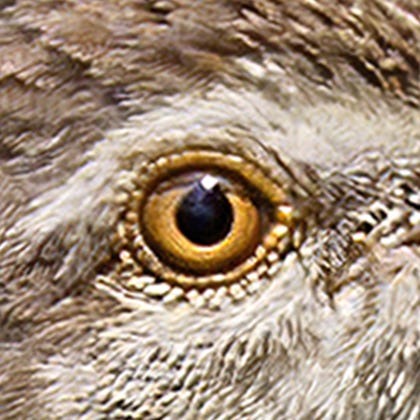
Whose Eye Was It?
The eye belongs to a plain prinia. Photo credit: Charles J. Sharp — Wikimedia Commons.
.jpg)
Take A Trip to Planet Ficus
My other newsletter Planet Ficus is devoted to stories about the world’s most fascinating plants — the strangler figs and their kin, which have shaped our world and our species in profound ways. Take a trip there for a rich mix of stories about the ecological and cultural importance of these trees.
Thanks for reading. For past editions, see the Archive. If you found it interesting or useful, please share and subscribe. If you want to get in contact, you can reach me at: thenaturebeat@substack.com.
Thank you for sharing, I didnt know about a lot of the updates.