

Nature Beat #106
Updates, stories, resources and opportunities

Welcome to the latest edition of Global Nature Beat. This edition includes:
Updates on the Global Forest Goals, a UN warning on sand, plants in peril, alternatives to GDP.
Features about gibbon trafficking, drivers of honeybee die-offs, decoys aiding vulnerable seabirds, new tools for exposing illegal mining, the booming butterfly-house industry, the biosecurity angle to ant-smuggling, and more.
Journal papers on the social side of the 30x30 target, hotspots of pangolin trafficking, biocultural conservation, pollinators boosting incomes and nutrition, conservation in forest concessions, illegal hornbill trade, rock outcrop ecosystems, Amazon drying, good science storytelling, and more.
Plus, the usual mix of news from around the world, useful resources, jobs and opportunities for environmental journalists, and more.
Taking The Pulse
Beyond GDP: GDP is a lousy indicator of progress. By only measuring what societies spend and invest, it fails to distinguish harmful economic activities from beneficial ones. Yet GDP growth is often the top priority of governments. Recognizing this perverse situation, in 2024, UN Member States mandated the production of an expert analysis of what could complement or go beyond GDP. On 7 May, the UN High-Level Expert Group on Beyond GDP released its final report. It suggests 31 alternative indicators for tracking progress in areas such as health, education, income, equity and security. The environmental indicators include measures of carbon emissions, biodiversity intactness, water quality, air pollution and natural capital. Together, the indicators shift the focus from measuring only what societies produce towards measuring human wellbeing and sustainability. Guyana and Spain will now co-facilitate an intergovernmental process that will focus on how to implement the report’s recommendations. The UN will also support countries to test using the new indicators.
Sand: Surging global demand for sand is threatening ecosystems and livelihoods around the world, warns a new report from the UN Environment Programme (UNEP). Infrastructure development currently uses 50 billion tonnes of sand per year, it says, adding that the use of sand for buildings alone is projected to rise by up to 45 per cent by 2060. UNEP frames the challenge in terms of competing demands for ‘dead’ sand for construction, and demands for the services that the ‘alive’ sand in ecosystems provides. See the press release for more details.
Forests: Considering their importance, the Global Forest Goals have a strangely low profile. They were laid out a decade ago in the United Nations Strategic Plan for Forests 2017–2030 and their deadline is fast approaching. On 11 May, the Secretariat of the UN Forum on Forests released a progress report. In a nutshell, the six goals are: to reverse global forest loss; to increase the benefits arising from forests; to protect and sustainably manage more forest; to raise more finance for forests; to improve forest governance; and to factor forests into wider policymaking. The report finds that 2 of the 26 associated targets are off track, while 7 have been largely met and 17 have been partially achieved. Overall, the picture is one of progress, but not enough to achieve the goals by 2030.
Plants: Two studies published last week in Science highlight threats facing plants. The first found that 7–16 percent of the world’s plant species are expected to lose more than 90 percent of their range by 2100 under current climate change projections. Even if these plants can disperse into new areas as the climate changes, those areas are unlikely to provide the habitat they need, raising the risk of extinction for 35,000 to 50,000 plant species — see the press release or the full paper. The second study focused on species with no or few relatives on their branch of the tree of life. It concluded that a fifth of the genetic and evolutionary history existing in the world’s flowering plants is under threat of extinction. The authors identified nearly 10,000 plant species for conservation to prioritize as they are both endangered and particularly evolutionarily distinct – read the press release or the full paper. See also a commentary in Science covering both new studies.
In The Spotlight
Ruth Thornton wrote about how the booming butterfly‑house industry offers some habitat and livelihood benefits but poses poorly understood risks to wild butterflies.
Leila Goldstein and Eung Sea wrote about a forest carbon project in Cambodia that is proceeding despite objections from many local people, who say they were excluded from consultations and did not consent to activities affecting their land.
Natasha Gilbert reported on the factors driving the recent record die-off of US honeybee colonies, including mite‑spread viruses, chronic pesticide exposure, poor nutrition and mounting environmental stressors.
Anne Pinto‑Rodrigues reported that gibbon trafficking has surged to record levels, with organized networks smuggling orphaned infants from Southeast Asia to India.
Carlos Mureithi wrote about the ecological and biosecurity risks linked to the booming illegal trade in giant African harvester ants.
Kingsley E. Hope reports that Ghana’s push for the 30×30 ocean target is unfairly burdening small‑scale fishing communities while industrial fleets continue operating with weak enforcement.
Heather Hansman wrote about how artist Sue Schubel’s exquisitely crafted decoys help restore vulnerable seabird colonies worldwide by luring birds to safe nesting sites.
Andrew Deck wrote about how geospatial artificial intelligence is enabling journalists to uncover Amazon‑wide illegal mining operations at a scale impossible through on-the-ground reporting.
From The Journals
Empirical analysis of factors that constitute “good” storytelling in science communication — read the full paper.
Rock outcrop ecosystems are ecologically and evolutionarily significant but are threatened and overlooked in policy and monitoring — read the full paper.
Genetic analysis reveals hotspots of pangolin trafficking and trade — read the press release or the full paper.
Biocultural conservation as an alternative model for conservation — read the full paper.
Social implications of the 30×30 global conservation target vary across three scenarios — read the press release, the full paper or a commentary by two of the authors.
How a shift in political context in Slovakia spells bad news for brown bears — read the full paper.
Large areas of natural forest within forestry and agricultural concessions in Southeast Asia could be conserved under higher carbon prices alongside other measures — read the full paper.
Deforestation-induced drying makes the Amazon more susceptible to switching to savannah, and sooner than previously thought — read the press release or the full paper.
Indonesia’s illegal hornbill trade includes species from Africa and the Philippines — read the press release or the full paper.
Research in Nepal quantifies how pollinating insects contribute to not only crop production but also income and nutrition — read the press release, the full paper or a commentary by two of the authors.
How to Support Global Nature Beat
I publish this newsletter as a free service to thousands of readers in more than 120 countries. If that is something you can support, please consider becoming a paying subscriber for less than £1 a week. If you can spare that, you will be helping me to keep Global Nature Beat going for those who cannot afford to pay.
What Caught My Eye
“Conservation isn’t failing — it’s just inconsistent, uneven and often badly measured,” say Stuart Pimm and John Gittleman in a new article about their team’s recent assessment of successes and failures.
In the United Kingdom, the Royal Astronomical Society is calling for artificial light at night to be legally recognized as a pollutant, citing its impacts on the natural environment and human health.
On 11 May, Indigenous organizations from across Latin America issued a joint communication to United Nations bodies warning that organized crime is increasingly harming human rights, security and the environment in their territories — see the press release from Amazon Watch.
Canada’s government has no plans to enshrine its nature targets into law, reports David Thurton.
BirdLife International says bulldozers are illegally destroying one of Albania’s most important wild places.
Ella McSweeney wrote that Ireland’s government is starving nature restoration of funding despite clear evidence that investing in ecosystems delivers enormous economic and environmental returns.
On 12 May, the European Commission launched a public consultation on the European Union’s Birds Directive and Habitats Directives, as part of its wider initiative to simplify regulation.
Conservation Allies reported that its partner, the Ukraine Nature Conservation Group won 43 legal victories and expanded protections for nature in 2025, despite the challenges of the ongoing war.
The iconic Camargue wetland of southern France is under threat, writes Jean Jalbert.
Environmental and climate journalists in Africa face a serious yet underreported risk from vexatious lawsuits known as SLAPPs, according to a new report from the International Press Institute.
On 7 May, Brazil, China and the European Union launched a coalition to improve the integrity and effectiveness of carbon markets — Germany and New Zealand are the first countries to join.
New Zealand’s government announced plans to boost voluntary nature and carbon markets with a new assurance scheme intended to give buyers and landowners confidence in what they are investing in — see expert reactions published by the Science Media Centre.
Tips And Resources
On 15 May, the Asian College of Journalism is hosting a webinar led by Joydeep Gupta and Athar Parvaiz, on reporting on climate change amid elections, economic crisis and geopolitics — register here.
The Pulitzer Center launched a four-part online training series called Investigating the Ocean that will start on 19 May — read more and register here.
The Association of Health Care Journalists published a tipsheet on hantavirus.
On 21 May, the Metcalf Institute and the Solutions Journalism Network have a webinar for climate, science and environmental journalists on using and reporting on artificial intelligence — register here.
The Knight Center for Journalism in the Americas and the Global Investigative Journalism Network are running an online course on investigative climate journalism from 1-28 June — read more here and register here for English or here for Spanish.
On 4 June, Covering Climate Now has a webinar on investigating and reporting climate solutions climate stories — register here.
See past editions for more tips and resources.
Jobs And Opportunities
The National Association of Science Writers is accepting applications for its Idea Grants — deadline 15 May.
UNESCO invites media organizations in Nepal to participate in training on climate action and disaster risk reduction — deadline 22 May.
Carbon Brief is offering a paid, three-week journalism internship — deadline 1 June.
The 2026 AAAS Kavli Science Journalism Awards are open for entries — deadline 1 August.
Bonus content: There are 32 jobs, grants, fellowships and other opportunities listed here for Global Nature Beat’s paying supporters. Paid subscriptions are less than £1 per week.
On The Horizon
11-15 May: The UN Forum on Forests takes place in New York City, United States.
30 May - 6 June: The Global Environment Facility’s Eighth Assembly and Associated Meetings take place in Samarkand, Uzbekistan
1-6 June: Rio Nature & Climate Week takes place in Rio de Janeiro, Brazil.
8-18 June: The UN Framework Convention on Climate Change’s intersessional conference takes place in Bonn, Germany.
14-16 June: The G7 Summit takes place in Évian, France.
14-19 June: The World Biodiversity Forum will take place in Davos, Switzerland.
Bonus content: The full calendar for Global Nature Beat’s supporters includes nature-related intergovernmental negotiations, scientific conferences, report launches, and other events up until 2028.
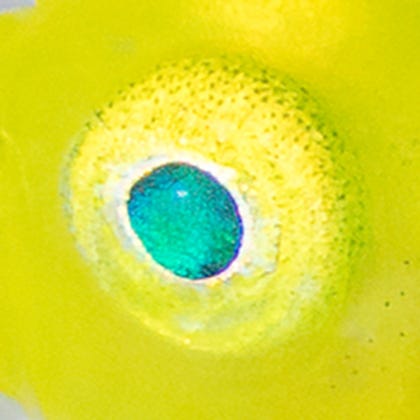
Whose Eye Was It?
The eye belongs to a gobio. Photo credit: Diego Delso — Wikimedia Commons.
,_Anilao,_Filipinas,_2023-08-23,_DD_174.jpg)
Take A Trip to Planet Ficus
My other newsletter Planet Ficus is devoted to stories about the world’s most fascinating plants — the strangler figs and their kin, which have shaped our world and our species in profound ways. Over the past year, I’ve taken readers to rainforest canopies and city streets, explored ancient scriptures and modern science, and followed threads that connect ecology and culture around the world. If that sounds interesting, you can subscribe here or check out my selection of top stories published so far.
Thanks for reading. For past editions, see the Archive. If you found it interesting or useful, please share and subscribe. If you want to get in contact, you can reach me at: thenaturebeat@substack.com.